From Wooden Frames to Modern Tennis Rackets: What Changed?
Tennis racket materials changed the frame, feel and room for contact. Learn what wood, metal and modern composites mean when comparing racket eras.
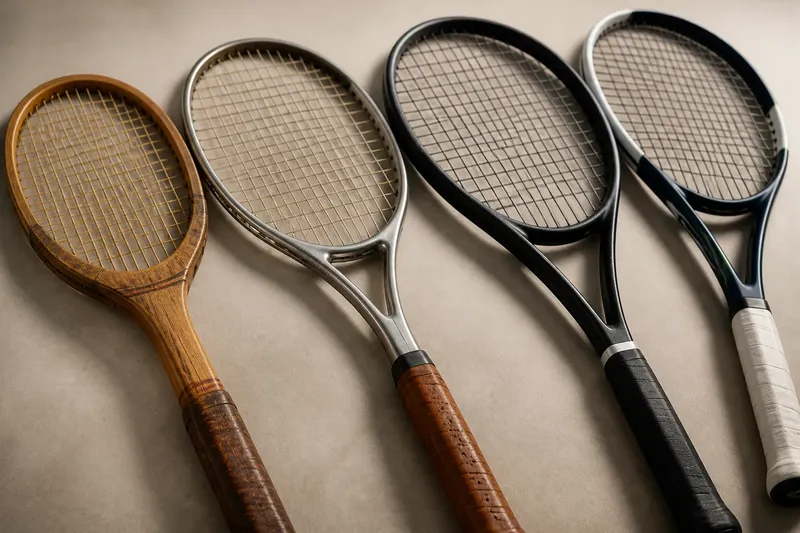
The most common mistake in comparing old and modern tennis rackets is to treat a newer frame as a simple upgrade; that overlooks what each design asks of the player. The history of tennis racket materials is a record of trade-offs in feel, timing and construction, from wooden frames to light composite designs.
Wood shaped the early racket
Wood was a natural choice for shaping the long, narrow frame around a small string bed. Early rackets were made from solid timber or laminated strips. Laminating let makers bend and join wood into a more controlled shape while retaining its characteristic feel.
The wooden frame had a relatively small head and a thin, flexible profile. Contact needed to be well timed, and a ball struck away from the centre of the strings was more likely to feel awkward or lose control.
Wood was not a uniform material. Different woods and construction methods affected weight, stiffness and response, while craftsmanship and stringing mattered too. A carefully made wooden racket could be effective for a player accustomed to it; it was not merely a crude precursor waiting to be replaced.
Wood constrained head size and handling
A central limitation was the frame’s ability to hold a broad, stable string bed. Wood could flex, but making the head much larger without compromising its strength and shape was difficult. A larger head would offer more room for contact, but its longer perimeter placed greater demands on the frame.
Wooden rackets were often heavy by current standards, though weight alone does not describe how one handles. Balance, head size and how the racket moved through a swing mattered as well. Players developed technique around their equipment: compact preparation, clean contact and sound timing were part of its practical context.
String technology mattered too. Natural gut strings were valued for their responsive feel, but string choice and tension could alter how a racket behaved. The frame was only one part of a connected system, like the handle and blade of a kitchen knife: changing one element can alter how the whole object feels in use.
Metal opened up new frame designs
Metal offered a way to build rackets less constrained by wood. Steel and aluminium frames could be formed into different shapes and could support larger heads than many traditional wooden frames. This opened the door to a more generous string area and a different balance of stiffness and weight.
Metal did not settle the question of what a racket should be. Steel could be sturdy but heavy, while aluminium allowed lighter constructions. The material also affected vibration and feel, so a change that helped one part of the design could make another less appealing to a particular player.
Manufacturers experimented with frame geometry as well as material. A different cross-section or throat design could influence how the frame flexed and resisted twisting on off-centre contact. These changes were not always obvious from appearance alone, which is one reason players often described rackets by feel rather than by a tidy technical label.
Larger heads became more practical
Stronger, more adaptable frame materials made it easier to expand the head while keeping the racket usable. A larger head created a larger string bed, giving players more room to make contact without striking the frame. It also gave designers new choices about string spacing, shape and the way the frame distributed forces.
That extra room did not remove the need for control. A larger head can change a racket’s balance and swing feel, and its response depends on construction and string set-up. It offers a different margin for contact, not a free pass on footwork or timing.
The transition from wood to metal and then to composite materials was gradual, not a clean handover. Newer materials appeared alongside older designs, and players did not all change at the same pace. A material could be promising without immediately becoming the preferred choice for every style of play.
Modern frames use fibre-reinforced composites
Many modern frames use fibre-reinforced composites, commonly built around carbon fibre and resin. Manufacturers can lay fibres in selected directions and combine them with other materials, allowing them to tune stiffness, shape and weight distribution more precisely than a single solid material would permit.
These frames are often described as graphite, though the finished racket is a composite rather than a block of pure graphite. Fibre direction, resin, frame profile and local reinforcement all contribute to how it bends and responds. Two rackets with similar labels may therefore feel quite different.
Composite construction allows a broad variety of head sizes and frame profiles. Designers can aim for a stable, firm feel or more flex while adjusting the throat, beam and balance. These are connected decisions, not independent features that can be selected without affecting one another.
Frame construction shapes a racket’s response
As materials became more adaptable, makers could tailor frame construction to produce a particular response. A stiffer frame tends to flex less during impact, while a more flexible design bends more. What a player notices also depends on strings, tension, ball contact and swing. “Stiff” and “flexible” are useful descriptions, but they do not explain a whole racket on their own.
Modern frames can also be designed to resist twisting when contact is off-centre. That may make the racket feel steadier, though stability is shaped by head size, weight distribution and the player’s swing. A frame that feels reassuring to one person may feel cumbersome or abrupt to another.
String patterns and grommet systems evolved alongside the frame. The pattern determines how strings are arranged across the head, while grommets protect them where they pass through the frame. These details affect string movement and maintenance, so a modern racket’s playing character comes from a system rather than material alone.
Modern rackets changed the demands of play
Modern rackets changed what was practical, but “easier” depends on which part of the game is being considered. A larger head can be more forgiving of imperfect contact, and a lighter frame may be easier for some players to accelerate. Yet the same racket may feel too lively, too stiff or poorly balanced for someone else.
Players also adjusted their strokes and tactics as equipment changed. A racket’s potential matters only in relation to preparation, contact point and preferred ball trajectory. It is misleading to credit equipment alone for changes in how tennis is played.
Imagine a club player whose familiar wooden racket has a small head and a response they know well. They switch to a composite frame with a larger head and find that slightly late contact feels less punishing, but the ball leaves the strings more sharply than expected. They keep the new frame’s string set-up unchanged for the moment and focus on timing; the observable result is a clearer sense of whether the different response suits their game, without mistaking a string adjustment for a property of the frame.
Compare racket eras by design, not age
To compare equipment fairly, look beyond the material name. These observations help explain the trade-offs:
- Head size: Check the string-bed area; if a larger contact area is the priority, compare head sizes, but if familiar handling matters more, consider the smaller head as an alternative.
- Frame profile: Check the beam’s shape and thickness; if a firmer response is preferred, consider the profile and stiffness together, but if a softer feel matters more, compare a more flexible design.
- Weight and balance: Check how substantial the racket feels and where its mass sits; if it feels difficult to move through a swing, consider a different weight or balance, but if it feels unstable, compare a design with a steadier feel.
- String pattern: Check the spacing and arrangement of strings; if the current response feels too lively or too muted, compare another pattern, but if it feels suitable, leave the pattern unchanged while assessing other features.
- Flex and stability: Check whether the frame feels controlled on centred and off-centre contact; if it twists or feels abrupt, consider another frame design, but if it feels steady, do not assume a change is needed.
- String choice and tension: Check what strings are installed and how the response feels; if the racket feels too firm or lively, discuss a suitable set-up with a qualified stringer, but if it feels comfortable, keep the set-up while comparing frames.
These details explain why an old wooden racket and a modern composite model cannot be ranked by age alone. One player may value wood’s familiar response; another may prefer the larger contact area or firmer feel of a contemporary design. The useful comparison is what each racket asks of the player and what the player wants from it.
What readers ask about tennis racket history?
When did tennis rackets stop being made from wood?
There was no single moment when wooden rackets vanished. Metal and composite models emerged and gained use over time, while wooden rackets remained in play for people who preferred them or had built their game around them.
Is graphite the same as carbon fibre?
In racket descriptions, graphite commonly refers to a carbon-fibre-based composite frame. The finished structure also includes resin and may combine materials or construction features, so the label does not describe every detail of its make-up.
Why are modern racket heads larger?
Newer frame materials made it more practical to support a larger string bed without relying on the constraints of wood. The larger head provides more contact area, but its feel and handling still depend on the full design.
Are wooden rackets better for learning tennis?
Not inherently. A wooden racket can help a learner notice the value of clean contact, while a modern frame may suit another learner through its size, balance or response. Comfort and appropriate equipment matter more than nostalgia.
How racket history can inform a choice
The history of tennis racket materials explains why equipment can feel so different; it does not supply a winner. If choosing a racket, consider how its head size, balance, frame stiffness and string set-up fit your current technique and preferences. Where a model’s materials or care requirements matter, follow the manufacturer’s information.
Wood, metal and composite frames reflect the materials and design choices available to their makers. When an old racket appears beside a modern one, compare the head shape and frame response before judging by age. The wood may ask for precision; the newer model may offer a different response, and neither can take the swing for you.